
Tanzanite Gemstone
Introduction
Spell-binding with its colours and mysterious with its clarity, tanzanite has been the stone everyone has fallen in love with! Boasting characteristics that are unique to it and it alone, you can rarely find a gem as beautiful as this. Jewellery designers cannot stop raving about its beauty and connoisseurs cannot stop collecting more of it. However, there is so much to know and learn about the mystery that this rare stone is. We’ve collected detailed data about this rare treat and put it all here.
Origin & Supply
The name of this stone has been originated from where it was exclusively found. Tanzanite is a single stone that is known to be sourced from only one location over the globe, and that was Tanzania, Africa. It is also the only stone that altered Birthstone chart built in 1912. It was added to as the birthstone of December, late in 2002. This name was suggested by the extremely famed and popularly loved Tiffany & Co., seeing as its commercial name “blue-violet zoisite” didn’t hold much customer appeal.
Discovered late in 1967, tanzanite was a gem that was instantly loved and coveted by everyone. It was initially thought to be peridot or even aquamarine, before geologists realised that it is unique in its make and colour. The sparkling perfect gem instantly became the talk of reigning jewellery fashion. By 1971, about two million carats of tanzanite were exported from the country, before the mines got nationalised by the Government of Tanzania and they put a ban on export of this stone.
For the encouragement and spur of local processing units, therefore affecting the economy, a ban was placed on export of rough stones over a gram, in the year 2010. The government believed that if the stone was processed in the country, it will have a better effect on growth of their own economy. This made the value of this gem grow overnight.
How is Tanzanite Mined?
The mining area of tanzanite was divided into 4 main sections, back in 2010. These were called Blocks A, B, C, and D. The blocks A and B have been kept apart for only foreign trade and investment. Geographically significantly bigger, Blocks C and D are for local operators, where national miners procure tanzanite in rough form.
It is believed by geologists that the sparkling gem is located about 200 metres below the surface of Earth. This is why tunnels and shafts are dug up to procure the gem. Deeper mines need extra-secure infrastructure with provisions of air and water. The boulders found are taken for processing, where excessive dirt is removed, and the crystal is chiselled for jewellery.
What to Remember While Buying Tanzanite?
If you’re stepping out to buy this lovely and rich gemstone, there are a few things that you need to pay focus to. Some tips and tricks may always help you in getting the best value of your buck.
- Like for most of the other gemstones, it is important for you to educate yourself before you buy this gem. Know in depth about the sparkling perfect treat and study its types before you decide which piece suits your budget.
- Study the 4Cs of your specimen. If you’ve chosen a particular piece, deeply study its cut, colour, carat, and clarity. These 4 determinants will tell you a lot about its value.
- Tanzanite only ranks 6.5-7 on the Mohs Scale of Hardness. This means that this gem is brittle and not as strong as sapphire or diamond. It may also have some cracks or fractures.
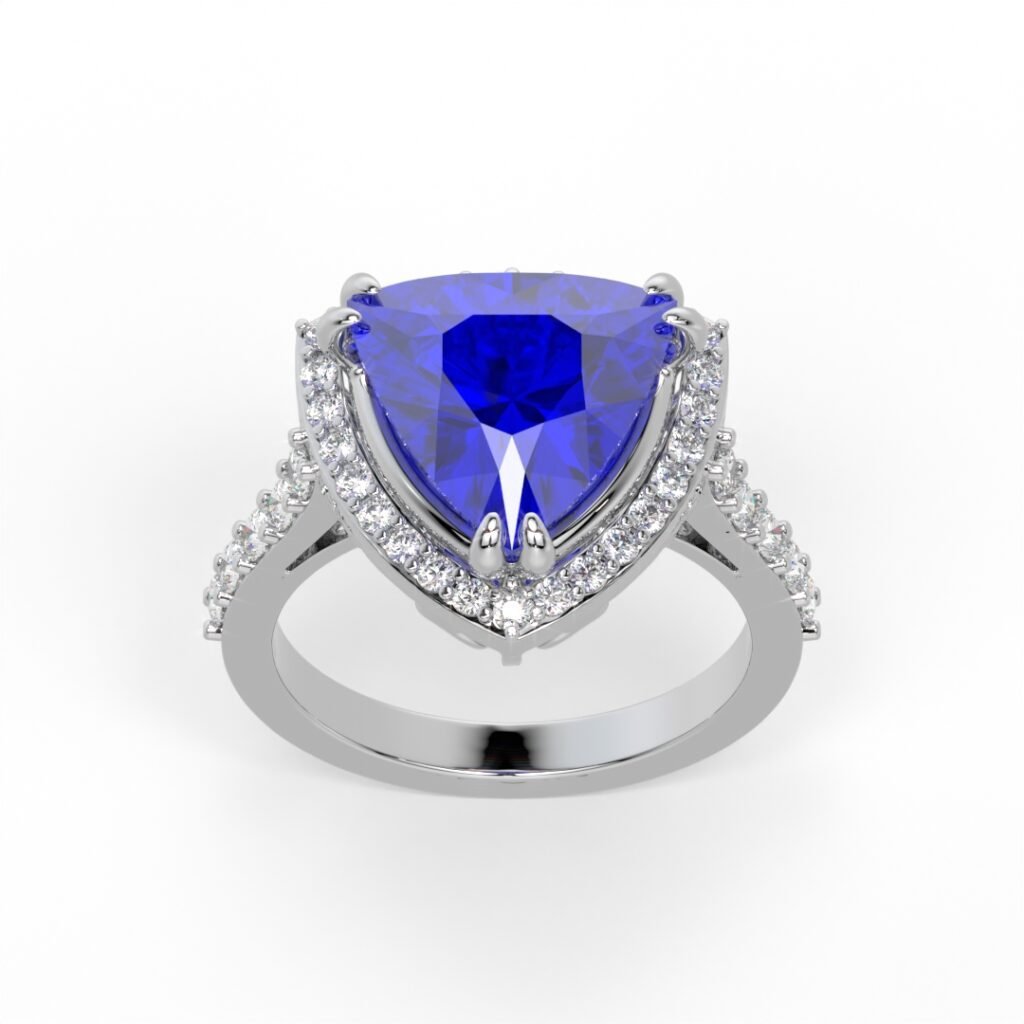
- Because of the low rank and low hardness of this stone, make sure that it is securely placed in your jewellery design. It might be favourable if it is set in a bezel as it secures the faceting and corners of stone. It might not be the best choice for daily-wear jewellery.
- A tanzanite piece that displays pleochroism (the ability of the stone to feature three different colours from different angles) will always be pricier. It’s one of the most redeemed traits of this gorgeous gem and prices fluctuate on its basis.
- Be sure to closely inspect tanzanite before you invest in it. Keep an eye out for cracks, fractures, nicks, and more. Tanzanite is a soft stone and these small cracks might break the stone over time and regular use.
- The Type I tanzanite specimen is always going to be pricier, owing to the fact that it will have no visible inclusions. Type III, on the other hand, will feature some small occurrences. These imperfections reduce the quality as well as value of the stone.
- If you’re investing in a jewellery piece that has both diamonds as well as tanzanite, you can have lower-priced diamonds. Tanzanite, alone, is a pricey centre jewel with strong and bold hues. Lighter-coloured diamonds will only give it an excellent contrast.
- Always ask for certification. The gem usually tips on the more expensive scale of the balance, so ask your dealer for a certificate of originality, or purchase from a reliable name.
- Almost all the gemstones in the circulating market have undergone some sort of treatment. Enquire with your dealer about the treatments that your tanzanite has undergone. Heat treatment is an acceptable one.