
Emerald Gemstone
Introduction
Revered and sought-after for their gaze-holding and exotic green hues, emeralds have held the fancy of everyone, since forever. The beautiful looking gemstones are widely known for their unique colour-clarity combination. In fact, their colour alone makes them so much more precious than diamonds. The mesmerizing beauty of emeralds makes them the perfect centre-stones in jewellery designs. Here, we’re telling you everything there is to know about this mysterious, beautiful, yet extremely popular gemstone.
Origin & Supply
The royal beauty of emeralds dates back several years. The first mines that ever provided us this gem were traced back in 330 BC. In fact, the famed Queen Cleopatra of Egypt had a particular fascination with the stones. The name of this sparkling gemstone originates from the Old French word “esmeraude” and it means green gem.
The oldest mines are known to have been found in Egypt, India, and Austria. However, as of present, the biggest supplier of the gem is Colombia, which offers 50-95% of the world’s emeralds. Second largest producer of the world is Zambia, which is responsible for 20% of the world’s circulating emerald stone. Other places where you can find traces of emerald are Afghanistan, China, France, Spain, Switzerland, Tanzania, United States of America, Zimbabwe, and several more.
How is Emerald Mined?
Open-Pit Mining
A pit-like gaping hole is set up, which is about 12 metres deep. A water blast is then conducted, which reveals the sparkling rocks. However, you need to remove lots of unwanted rocks before finding what you’re looking for.
Terrace Mining
This method is mostly used in Cambodia and is similar to Open-Pit Mining. However, bench-like space is formed parallel to the pit. These are called exploration pits, where they peek into new rocks.
Tunnel Mining
When a vein with emeralds is located, a tunnel is dug through the Earth. These tunnels are closer to the surface and can usually only fit in one person at a time.
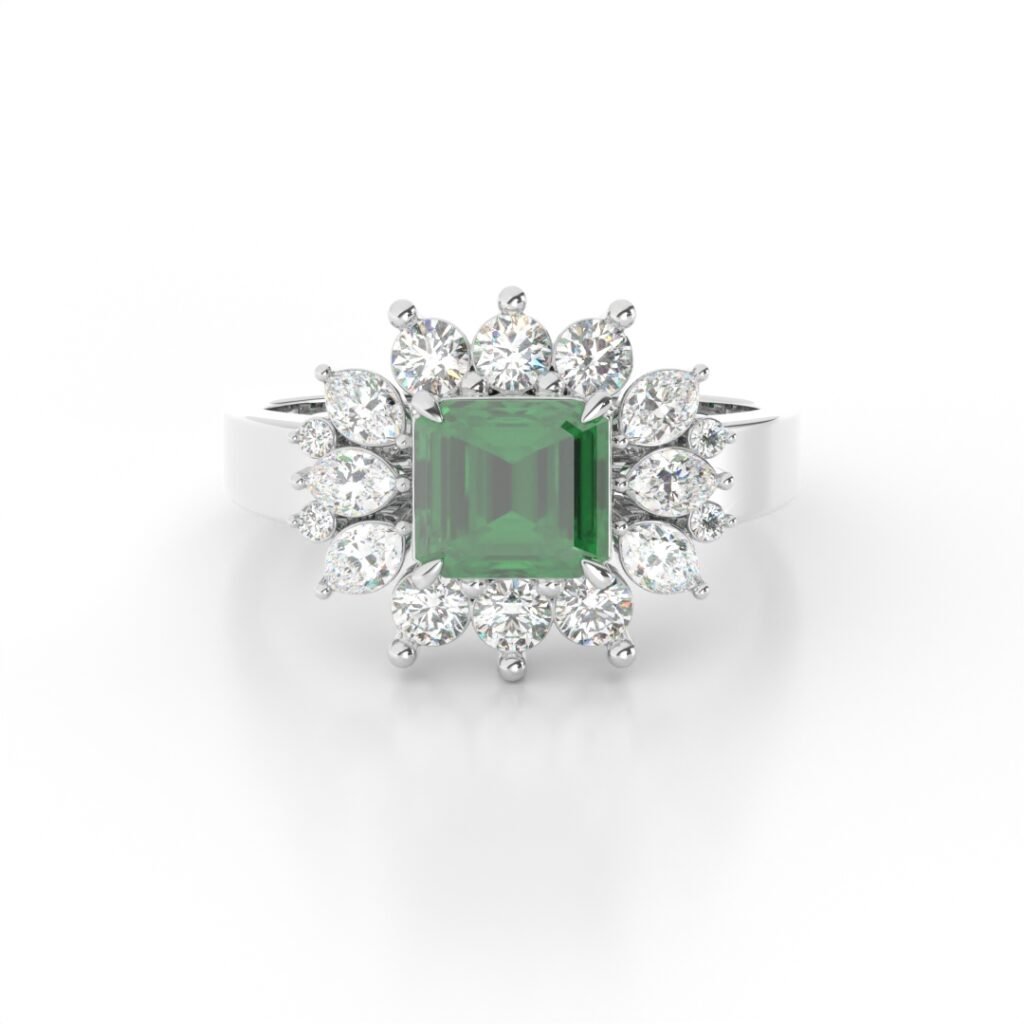
What to Remember While Buying Emerald?
There are lots of things to keep in mind when you’re shopping for an emerald. The stone has several rip-offs, too, which makes it important to remember these tips before picking your piece:
- If it’s not green, it’s not emerald. Emerald is a stone from the beryl family that is only available in green colour. If someone is offering you any other colour, it’s not a real emerald crystal.
- Fissures and inclusions are valuable in emerald. The stone is considered to be soft and will definitely have inclusions. If your stone is absolutely perfect, it probably isn’t emerald at all.
- Enquire about treatments. Every emerald is oiled after being cut and faceted, to fill the surface-reaching fissures and maintain its stability and clarity. While oiling is acceptable, filling it with green-tinge oil isn’t.
- Find out where your emerald is from. The best mines are found in Colombia and are called Muzo, Coscuez, and Chivor.
- Emerald ranks 7.5 to 8 on the Mohs Scale, making it a considerably tough stone. However, it is susceptible to break or scratch if it is handled poorly, so it’s important to understand the best setting for it in your jewellery.
- High-priced and rare emeralds will very rarely be on large discounts. No jeweller will sell them off for an extremely low price. Don’t let it be too good to be true.
- A bigger emerald isn’t necessarily pricier. Carat weight doesn’t have a lot of effect on the price of this stone. A smaller stone with a richer hue will be far more expensive than a bigger specimen with flaws.
- There are several extremely cheaper green stones that are coloured glass or quartz. These aren’t real gemstones and are extremely fragile, too. Make sure you have certification that proves its authenticity.
- Even though inclusions are beautiful in this stone, more of them will jeopardize its stability. The more the inclusions, the weaker the stone. Know the balance and shop for the correct piece.