
Ruby Gemstone
Introduction
Prized and treasured for its marvellous and engaging hues, here is a gem that has been popular since ages! The crimson delight finds its centre spot on countless designs of jewellery. Known to have the highest price per carat, it is also considered to be one of the most important gems of the market. In fact, this gemstone is counted among the cardinal stones, which also have diamonds, emeralds, amethysts, and sapphires. Here, you’ll find everything there is to know about the dazzling and hypnotizing gemstone.
Ruby has been regarded as an incredibly powerful stone since times immemorial. It was believed by ancient Hindus that whoever presented this gorgeous gemstone to Lord Krishna would be made an emperor in the next birth. History of the gem has also told us that some people wore it in the left hand, believing it would bring them power and fortune. Some people say that Ruby was considered to be the most powerful stone among the 12 gems that God created!
Origin & Supply
Name of this gem is originated from the Latin word “rubens,” which is for red. Known popularly with its mesmerizing and captivating crimson colour, this gem has been coveted by countless since it was discovered. It is also considered to be the stone of tales. Because of its deep colour, it has been associated with a lot of legends and mysteries, formed over the years. In fact, ruby birthstone is considered to be among the most important birthstones. They are also known for their different places of origin. Their colour and grade, too, change with their origin.
Ruby by Origin
Ruby (Myanmar)
Mined and sourced from Myanmar, these stones hold an intense, rich, and highly prized deep red colour with hints of blue. These gems are considered to be rare and expensive, among the finest quality of the stones ever found. Their most expensive range is called Pigeon Blood Ruby, which has a hypnotizing crimson red colour.
African Ruby
The main features of African rubies are their colour and transparency. These stones have a rich and deep red colour, which ruby is mainly known for. However, they come with opaque clarity and contain a lot of inclusions. They’re mostly used for cabochon cuts. The colour may vary from a dark red to darker pinks.
Thai Ruby
When initially discovered, Thai Ruby was recognised with its deep and intense red colour, which is quite similar to the shade displayed by garnet. Over the years, heat treatment made the colours look richer and lighter, a process that exponentially increased the value of Thai Rubies. Now, these gems are reigning their market with the excellent clarity-and-colour combination.
How is Ruby Mined?
Pit Mining
This process is used in river deltas or areas that were deltas at one point. Here, the core carrying gem is placed, and strong irrigation process washes away the mother rock, sand, dirt, gravel, and other additions found around the stone, leaving only the strong and sturdy crystal. This process is used for the cores that are 3 to 24 metres deep.
Open-Trend Mining
This is employed when mining for the gems is carried on the mountains. Strong pressure of water is applied on the slopes where the rocks are found. This pressure washes away all the sand, gravel, and mother rock, leaving only the glistening crystal behind. However, this process results in comparatively smaller stones as found in pit mining.
Cave System
Small caves are dug in the ground to locate gravel containing the gem. Again, these rocks are cleaned with strong pressure of water to wash out the mother rock. It usually results in a higher yield; however, the caves collect water that needs to be pumped out. They are also usually abandoned during the monsoon season for the risks of flooding.
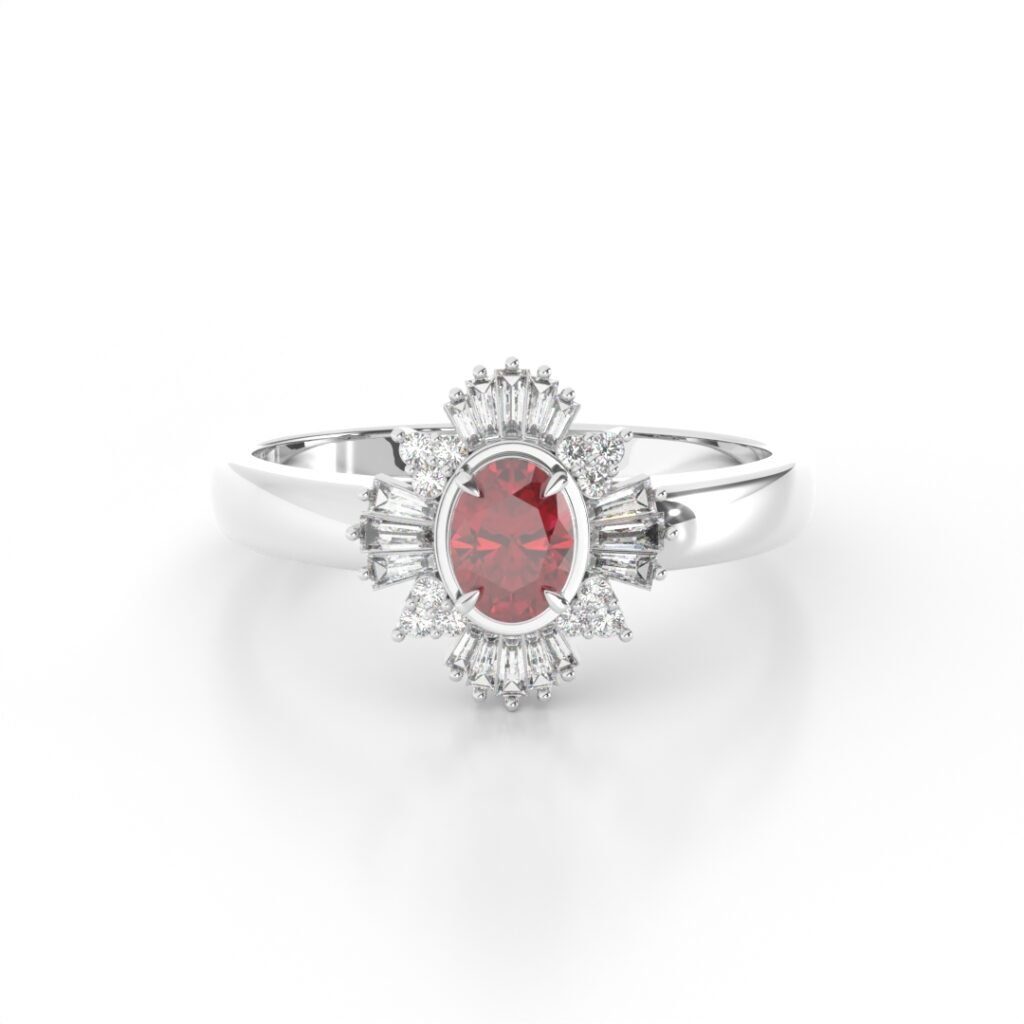
What to Remember While Buying Ruby?
There are several tips and tricks that you ought to keep in mind when buying ruby. Some of the more important ones are mentioned below:
- Know the 4C’s: colour, carat, cut, and clarity. The highest-grade stone will have intense and deep red colour, will weigh around a carat, chiselled into oval or cushion cut, and will have minimum inclusions or clouding.
- Several jewellers claim that the stone they’re offering hasn’t been treated. However, almost every gemstone undergoes some or the other enhancement or treatment process. You need to find out which one it is.
- Another feature that affects the grade of this gem is its origin. Burmese Rubies and Madagascar Rubies are counted among the costliest varieties of the gem, owing to their fabulously rich colour and bespoke clarity. Stones of other origins are comparatively lower priced.
- The price of ruby rises with its carat weight. When you’re making your budget, factor in the price per carat, too. If you’re looking for affordable rubies, then aim for carat weight below 1.
- Inclusions, clouding, and fractures in the crystal are considered to be natural. However, if these are affecting the transparency, the price of ruby goes way down. Hold your stone against light to observe these inclusions. If it’s near to clear, it’ll be more expensive.
- Rubies are rarer than diamonds or sapphires and are, hence, higher priced. No authentic jeweller will offer you slashed down prices of ruby. These stones are as prized as they’re rare. If you’re finding an unbelievably low amount, beware.
- The most popular imitations used in the current market are garnet and red glass. However, they can be placed apart just by colour. The colours of both these gems are brighter and more vivid than a ruby.
- Ruby ranks 9 on the Mohs Scale of Hardness, which makes it a pretty strong and durable gem. It cannot be easily broken, as opposed to its counterparts.
- When shopping for ruby, be sure to ask for a certificate of authenticity if you’re purchasing a higher-priced gemstone.